
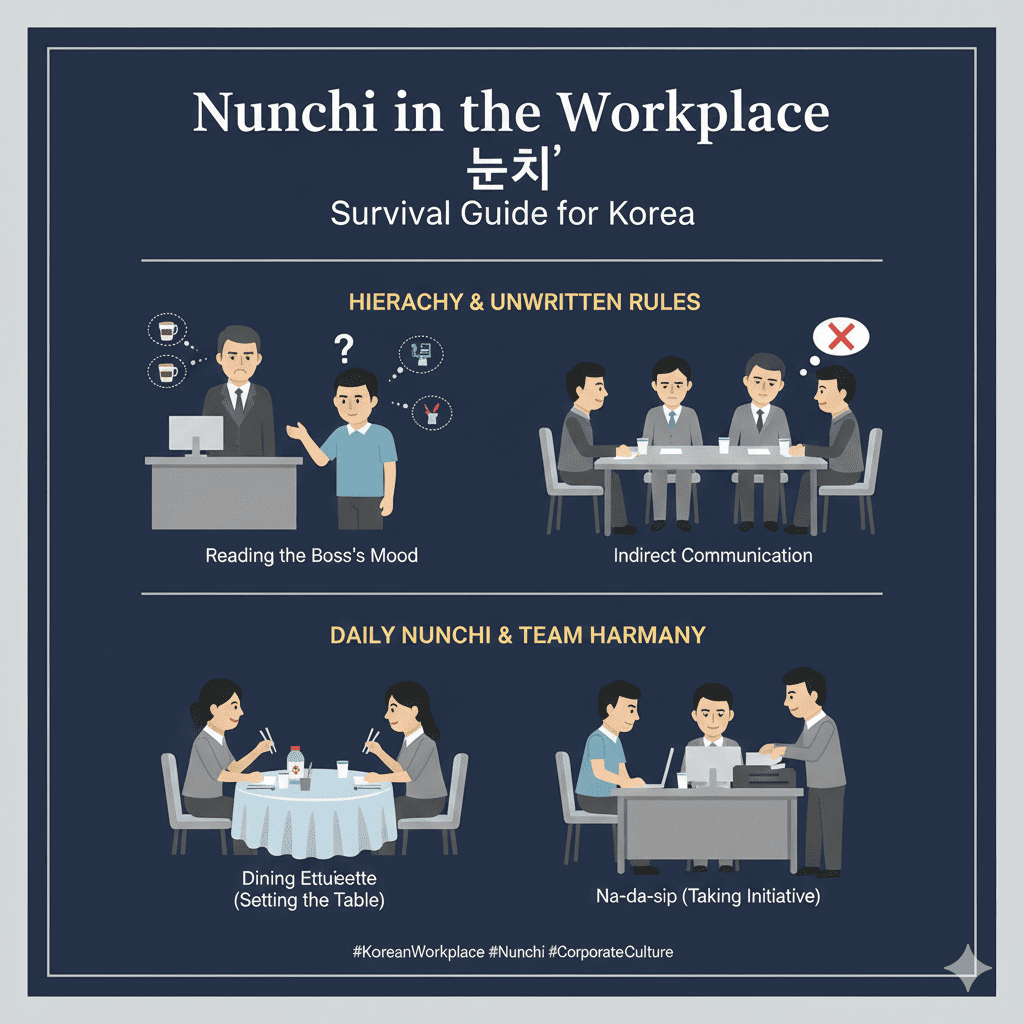
Nunchi is a unique cultural concept rooted deeply in South Korean society, one that is difficult to translate into a single word in any other language. Even for Koreans, defining it precisely is a challenge, yet every local instinctively knows what it feels like. If you are an expat planning to work in South Korea, understanding “Workplace Nunchi” is not just an option—it is a vital element for your professional success and social integration.
In this post, I will share why Nunchi is essential in the office and provide real-life examples from my own career to help you navigate the Korean corporate world.
[Note] For a deeper understanding of what Nunchi is and its cultural background, please refer to my previous post: [Link: The Art of Nunchi: The Secret Survival Skill in Korean Society]
1. Why Nunchi is Mandatory in Korean Offices
The Korean workplace is characterized by a very clear hierarchy. Structure is divided by years of service and job titles, where the word of a superior generally carries significantly more weight than that of a subordinate. As you move higher up the ladder, this influence only grows stronger. Consequently, if you are starting as a junior or a new hire, observing Nunchi is an absolute necessity to adapt to this vertical group dynamic.
2. Nunchi in Daily Office Life: “Na-da-sip”
In Korea, there is a common slang term called “Na-da-sip” (나다 싶으면 해), which roughly translates to: “If you think it’s your turn to act, just do it.” This refers to taking the initiative on small, unspoken tasks without being asked. In a hierarchy-based society, doing these small things can significantly shape how your colleagues and superiors perceive you.
To help you understand, here are some practical examples from a typical Korean office setting:
- Example – Dining Etiquette: When going out for a team lunch, a junior with Nunchi often takes the lead in setting the spoons and chopsticks for everyone and refilling side dishes when they are empty. In fact, I once heard senior staff criticizing a new employee behind their back, calling them “disrespectful” or “clueless” simply because they sat still during lunch without helping with the table setting.
- Example – Office Maintenance: You can leave a great impression by doing small tasks such as refilling the A4 paper in the printer, gathering simple data, or picking up company diaries on behalf of the team without being told.
Therefore, if you are an expat starting a job in Korea, taking the lead in these miscellaneous tasks can help you build a strong, positive image from the very beginning.
3. Reading the Room: Nunchi in Business Tasks
Workplace Nunchi also involves reading the emotional state of your superiors and understanding the team’s unspoken “vibe.” Based on my professional experience, here are a few scenarios where you must catch the unspoken intentions of others:
- Example – Timing Your Reports: If you made a mistake, it is wise to check your boss’s mood first. If they are in a good mood, they might be more forgiving; if they are stressed, you might face a much harsher reprimand.
- Example – Anticipating Needs: If you notice your boss on a difficult phone call, you might quietly provide necessary information via messenger or a sticky note. This demonstrates high-level Nunchi and often leads to excellent performance reviews.
- Example – The “Unwritten” Rules (Teamwork): I once knew a senior colleague who was highly competent but never helped teammates once his own work was finished. In a team that valued collective effort, his “individualist” behavior was seen as a lack of Nunchi. He was eventually stigmatized and transferred to another department.
- Example – Indirect Communication (Overtime & Opinions): Hierarchical culture often involves “reading between the lines” rather than waiting for a direct order. For instance, my own boss once jokingly said, “You must be busy in the evenings since you leave so early.” I understood this not as a joke, but as a subtle signal to stay longer until he finished his work.
- Example – Nunchi with Executives: Even at the executive level, Nunchi is critical. In my company, there was an executive who voiced a strong opposing opinion to the CEO’s vision. Although he was just being professional, he was forced out of the company by the next quarter. This shows that when dealing with top-level management, “Nunchi” sometimes means knowing when to align your style with theirs rather than offering direct opposition.
4. The Positive Side: Building Your Reputation
While Nunchi can feel exhausting, it is not purely negative. Using it well can drastically improve your standing in the company.
During my first three months as a new hire, I focused on external Nunchi: setting tables, checking drink levels at dinners, and even updating my seniors’ laptops after checking company announcements. By reading the team’s needs and acting before being asked, I gained significant trust. Now, four years later, I am highly regarded not just for my work performance, but for being someone who “understands the flow” of the office.
Conclusion: Is Nunchi Changing?
To many expats, constantly monitoring a boss’s desires can feel incredibly tiring. It is true that the younger “MZ Generation” in Korea is increasingly pushing back against this, preferring individual freedom over collective Nunchi. Many modern workplaces are actively trying to dismantle rigid hierarchies.
However, Korean society still revolves around Nunchi. If you want to work here, studying this concept is essential for faster adaptation and smoother relationships.
If you want to know more about Nunchi Click

![[K-History / True Crime] The Woman Who Knew Too Much: The Mystery of the Jeong In-suk Murder Case](https://allaboutk.com/wp-content/uploads/2026/01/jungin-suk-murder-600x400.png)

![[Military Story Part 2] Controversies and My Candid Thoughts on the Korean Military](https://allaboutk.com/wp-content/uploads/2026/01/Korea-military-part2-1-600x400.png)